
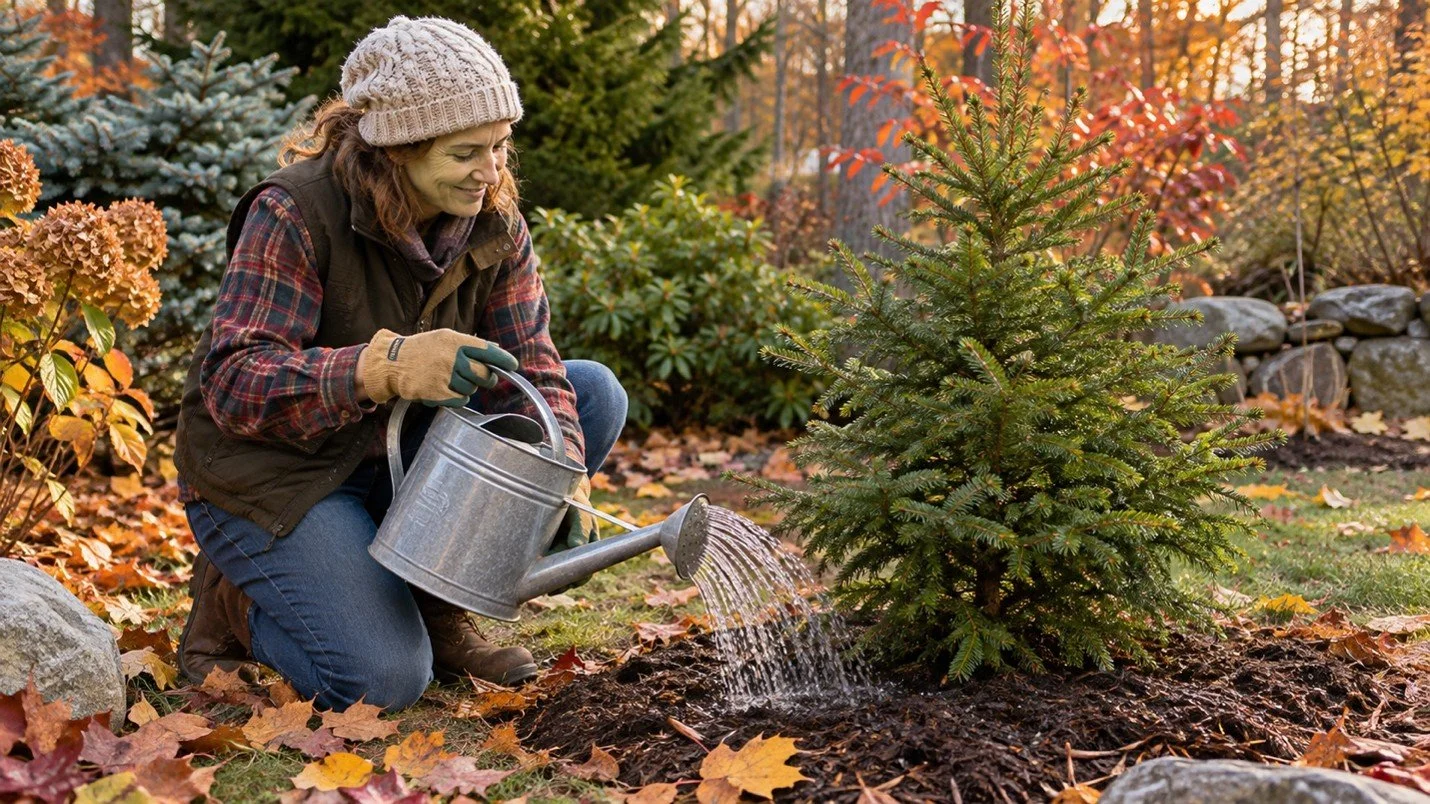
As temperatures drop and the growing season winds down, it's easy to assume your garden no longer needs watering. But here's something that might surprise you: Fall watering can be just as important as summer watering! Even when the air feels cool and plants are slowing down, their roots still need moisture. Giving your trees, shrubs, and evergreens the right amount of water before winter can make a big difference in how they look and grow next spring.
Why Fall Watering Matters
Cooler temperatures mean less evaporation, but they don't guarantee your soil has enough moisture. Long stretches without rain, combined with windy conditions, can leave plants thirsty heading into winter.
Newly planted trees and shrubs are especially vulnerable. Their root systems are still developing, so they depend on consistent moisture to become established before the ground freezes. Even trees that have dropped their leaves need water to support their roots during the fall.
Evergreens Need Extra Attention
Unlike deciduous plants, evergreens keep their foliage throughout winter. That means they continue losing moisture through their needles and leaves, even during colder months. Arborvitae, holly, rhododendrons, pines, and other evergreens can suffer from winter drying, sometimes called winter burn, when their roots can't replace moisture lost to cold winds and winter sunshine. Here on Cape Cod, where coastal winds can be especially drying, proper fall watering is an important part of protecting your landscape.
How to Water Before Winter
A little extra attention now can help prevent problems later. Follow these simple tips:
Check the soil first. Dig down about 4 to 6 inches. If the soil feels dry, it's time to water.
Water deeply and slowly. A gentle soaking around the root zone is better than frequent, light sprinkling.
Pay attention to new plantings. Recently planted trees and shrubs need regular moisture while their roots become established.
Don't overwater. Soil should be moist, not soggy. Too much water can be just as harmful as too little.
Keep watering until the ground freezes. Continue checking moisture during dry fall weather, even after the leaves have dropped.
Don't Forget the Mulch!
A 2 to 3-inch layer of mulch around trees and shrubs helps retain soil moisture, moderate soil temperatures, and protect developing roots. Just remember to keep mulch a few inches away from trunks and stems.
Give Your Garden a Head Start on Spring
A healthy spring garden starts with good fall care! Taking a little time to check soil moisture and water when needed can help your plants withstand winter stress and return stronger when warmer weather arrives.
Have questions about preparing your landscape for winter? Stop by Scenic Roots. Our friendly team is happy to help you care for your trees, shrubs, and evergreens through the changing seasons.
A little water now can make a big difference next spring!
